Discovering that a hard drive partition has been accidentally deleted can trigger immediate panic. Whether caused by a misstep during an operating system installation, an incorrect command in diskpart, or a third-party disk management tool error, losing access to an entire drive volume feels catastrophic.
The short answer is yes, data can be recovered after accidental partition deletion in most scenarios. However, success depends heavily on the storage technology (HDD vs. SSD) and the actions taken immediately following the deletion.
Overview: What Happens When a Partition Is Accidentally Deleted?
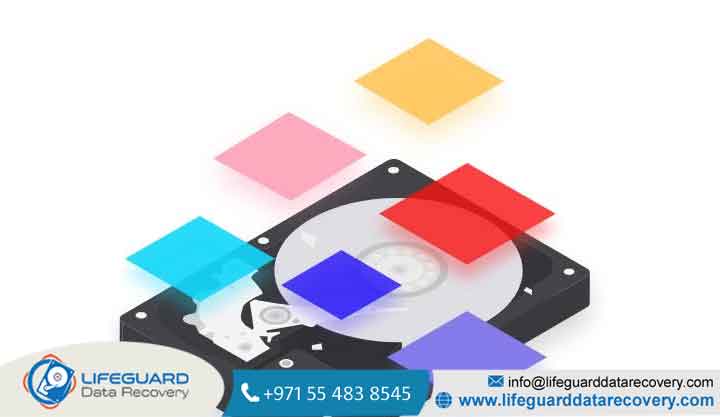
When you delete a partition on a storage device, the operating system does not immediately erase every file stored within those sectors. Instead, it removes the pointers to that data.
How Operating Systems Store and Delete Partition Headers
Storage drives rely on partition tables primarily Master Boot Record (MBR) or GUID Partition Table (GPT) to define where volumes begin and end. The partition table acts as an index directory for the operating system:
-
When a partition is deleted, the system simply deletes the volume’s index entry from the MBR or GPT header.
-
The operating system now marks that space as Unallocated.
-
The file system metadata and raw file structures on the physical blocks remain intact until new data overwrites them.
Unallocated Space vs. Physical Data Destruction
There is a fundamental difference between marking space as “Unallocated” and performing a low-level format or zero-fill erase:
-
Unallocated Space: The drive controller treats the blocks as available for future write operations, but the existing binary bits remain in place until written over.
-
Data Destruction: Occurs when new file writes populate those unallocated blocks, permanently overwriting the legacy magnetic or electronic cell states.
The Critical Impact of SSD TRIM vs. Traditional HDD Recovery
The hardware architecture of your storage device dictates recovery probability:
-
Traditional Hard Disk Drives (HDDs): HDDs retain magnetoid data on platter sectors indefinitely until explicitly overwritten by new files. Data recovery after accidental partition deletion on mechanical drives has a exceptionally high success rate.
-
Modern Solid-State Drives (SSDs): SSDs utilize flash memory and feature a background optimization process called TRIM. When a partition is deleted on an SSD, the operating system sends a TRIM command to the drive controller, proactively clearing the underlying NAND cells to maintain future write speeds. If TRIM executes, recovering deleted partition data becomes virtually impossible.
Causes & Signs: How Partition Loss Happens and How to Identify It
Accidental partition deletion often presents with distinct system behaviors depending on how the loss occurred.
Common Causes of Accidental Partition Deletion
-
Diskpart Execution Errors: Accidental selection of the wrong disk number when running the
cleancommand in Windows Command Prompt. -
OS Installation Missteps: Deleting primary system or data partitions when setting up dual-boot configurations or re-installing Windows/Linux.
-
Third-Party Formatting Software: Partition resizing or merging software crashing midway through operations.
-
Corrupted Partition Tables: Malware infections or sudden power outages writing corrupt data to the MBR/GPT sectors.
Clear Symptoms of a Deleted or Lost Partition
-
Missing Drive Letter: A partition previously designated as
D:orE:suddenly disappears from File Explorer. -
Unallocated Space in Disk Management: Windows Disk Management displays a large block marked with a black bar labeled “Unallocated” instead of “NTFS” or “FAT32”.
-
RAW File System Error: The volume shows up, but accessing it yields prompts like “You need to format the disk in drive before you can use it.”
-
Boot Configuration Errors: The system halts during boot displaying error messages such as “Operating System Not Found” or “Missing Boot Device”.
Emergency Rules: What NOT to Do Immediately After Partition Deletion
To safely recover data after partition deletion, you must protect the underlying drive sectors from being overwritten.
Stop Writing New Data to the Affected Physical Drive
If the deleted partition was on your primary system drive (C:), shut down the computer immediately. Running the operating system generates temporary files, system logs, and cache data that can overwrite unallocated space. If the partition was on an external drive or secondary internal drive, disconnect it or refrain from saving new files to it.
Avoid Formatting, Re-partitioning, or Running CHKDSK
-
Do Not Create New Partitions: Initializing a new volume in the unallocated space writes new file structures over the old partition metadata, destroying recovery pointers.
-
Do Not Run CHKDSK: Windows Disk Check (
chkdsk) is designed to fix file system consistency, not recover lost partition boundaries. Runningchkdskon a lost or corrupted partition table often corrupts raw data blocks permanently.
Step-by-Step Solutions to Recover Data After Accidental Partition Deletion
Follow these methods sequentially, starting with native tools and open-source utilities before utilizing dedicated recovery software.
Restoring Lost Drive Letters via Windows Disk Management
Sometimes, a partition isn’t deleted it simply lost its mounting point or drive letter assignment.
-
Right-click the Start Button and select Disk Management.
-
Locate your drive and inspect the partitions listed.
-
If a partition volume is visible (showing
NTFSorexFAT) but lacks a letter (e.g.,D:):-
Right-click the partition volume and select Change Drive Letter and Paths…
-
Click Add, select an available drive letter from the dropdown menu, and click OK.
-
-
Check File Explorer to confirm your files are accessible.
Recovering Files from Unallocated Space via Partition Recovery Software
If the partition boundary headers are severely damaged or overwritten, use deep sector scanning tools to extract files directly from unallocated space to a separate, safe drive.
-
Download a reliable recovery utility onto a separate drive (e.g., an external hard drive).
-
Launch the software and select the Unallocated Space or the physical drive containing the lost partition.
-
Run a Deep Scan. The software will bypass missing partition tables and read raw file signatures directly off physical blocks.
-
Filter and preview the discovered files (documents, media, archives).
-
Select the target files and restore them to a different physical disk to prevent overwriting remaining data.
Prevention Tips: Protecting Your Drive Partitions Against Future Loss
Preventing accidental loss is far simpler than executing complex recovery procedures.
Implementing Automated Backup Systems (The 3-2-1 Rule)
Maintain the 3-2-1 Backup Rule:
-
Keep 3 copies of critical data.
-
Store them on 2 different types of media (e.g., internal drive + external drive).
-
Keep 1 copy completely offsite or in a secure cloud backup system.
Best Practices for Disk Management
-
Verify Drive Numbers: Always double-check drive labels and sizes in Command Prompt or Disk Management before executing commands like
cleanorformat. -
Disable Unnecessary TRIM During Recovery: If an accidental deletion occurs on an SSD, powering down immediately or using emergency software that pauses TRIM operations gives you a window to recover unallocated blocks.
Frequently Asked Questions (FAQ)
Can you recover a deleted partition for free?
Yes. Open-source utilities like TestDisk allow you to repair corrupt or deleted MBR and GPT tables and restore partitions completely free of charge. Native OS command utilities like diskpart can also restore drive letter assignments without paid tools.
How do I recover a deleted partition without formatting?
You can recover a deleted partition without formatting by repairing the drive’s partition table using utilities like TestDisk. Rebuilding the table restores original file system pointers without initializing new data structures or wiping underlying sectors.
Can partition data be recovered after running diskpart clean?
Yes, provided you ran the basic clean command rather than clean all. The standard clean command only removes partition index headers, leaving data sectors intact. The clean all command zero-fills the entire disk, rendering recovery impossible.
Is it possible to recover data from an SSD partition after deletion?
It depends on how quickly the drive is isolated. If the operating system issues a TRIM command and the SSD controller completes garbage collection, the deleted blocks are zeroed out and unrecoverable. However, if the drive is powered down immediately after deletion, file recovery may still be possible.