
Solid-state drives (SSDs) revolutionized modern computing by replacing mechanical hard drives with lightning-fast flash memory.
However, many users notice that over time, their once-blazing-fast drive begins to lag. Boot times stretch out, game loading screens hang, and copying large files causes transfer speeds to collapse mid-process.
If you are experiencing slow SSD performance, you are not alone. While flash storage does not suffer from mechanical fragmentation like traditional hard disk drives (HDDs), it operates under unique physical and architectural constraints.
In this comprehensive guide, we will break down the primary causes of SSD slowdown, explain the underlying mechanics of flash memory degradation, and walk through step-by-step solutions to restore your drive’s peak read and write speeds.
How SSD Speed Works: Why Flash Storage Slows Down Over Time
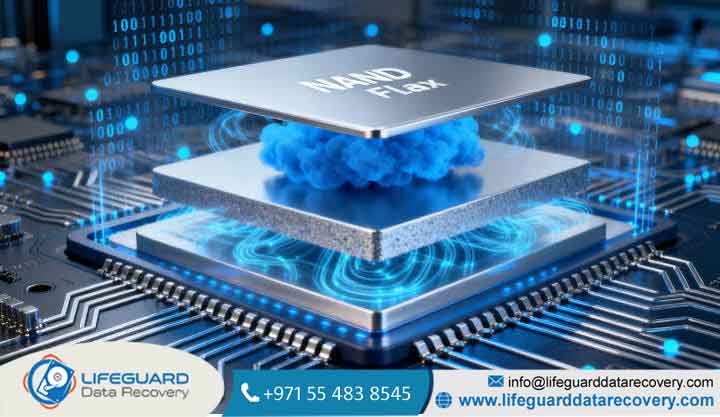
To understand why is my SSD slow, it helps to understand how flash memory reads and writes data. SSDs store data on NAND flash chips using electronic memory cells (SLC, MLC, TLC, or QLC). Unlike an HDD
which can overwrite data directly on a spinning platter, an SSD cannot overwrite existing data directly. It must first erase the old data before writing new data.
-
Pages vs. Blocks: Data is written in small units called pages (typically 4 KB to 16 KB), but memory can only be erased in much larger units called blocks (often 128 to 512 pages).
-
Write Amplification: When you modify a file, the SSD writes the updated version to a fresh page and marks the old page as “stale.” Over time, blocks become cluttered with a mix of valid and stale data.
-
To clear a block, the drive must copy the valid pages elsewhere, erase the entire block, and rewrite the valid data. This process creates write amplification and induces SSD speed degradation.
-
The SLC Cache Effect: Most modern TLC (3-bit) and QLC (4-bit) drives use a small portion of their memory in high-speed Single-Level Cell (SLC) caching mode. When you transfer a large file, data writes rapidly into the SLC buffer.
-
Once that cache fills up, transfer speeds drop dramatically to the drive’s native TLC/QLC speed often causing sudden, unexpected write slowdowns.
-
DRAM vs. DRAM-Less SSDs: High-end SSDs feature dedicated DRAM chips to store the flash lookup table (the map of where your files physically live). Budget DRAM-less drives rely on system RAM via Host Memory Buffer (HMB).
-
When system RAM is heavily taxed, DRAM-less drives experience significant latency spikes during random read/write operations.
Top Causes of SSD Performance Degradation
If you are investigating SSD performance issues, one or more of the following technical factors are usually responsible:
High Capacity Usage (The 80–90% Threshold)
When an SSD exceeds 80 90% of its total storage capacity, available empty blocks become scarce. The SSD controller must constantly pause to execute read-erase-modify-write operations in real time rather than performing background maintenance.
Disabled or Unsupported TRIM Command
The TRIM command is an OS-level instruction that informs the SSD controller which data pages contain deleted files and can be safely erased in the background (a process called Garbage Collection).
Without TRIM enabled, the SSD controller does not know a page is free until you attempt to write to it, forcing a slowdown during active file writes.
Thermal Throttling (Overheating Controller)
Fast NVMe PCIe 3.0, 4.0, and 5.0 SSDs generate significant heat particularly on the controller chip. When temperatures exceed safe operational thresholds , the built-in thermal management throttles read and write speeds down to prevent permanent silicon damage.
Bus, Interface, and PCIe Lane Bottlenecks
Plugging a PCIe 4.0 NVMe drive into a PCIe 3.0 slot halves its theoretical throughput. Similarly, legacy SATA SSDs running on old BIOS settings set to IDE mode instead of AHCI (Advanced Host Controller Interface) lose access to Native Command Queuing (NCQ), directly degrading performance.
Outdated Firmware or Generic OS Storage Drivers
SSD manufacturers regularly release firmware updates that fix controller bugs, optimize garbage collection algorithms, and manage thermal behavior. Furthermore, relying on generic Microsoft storage drivers instead of dedicated manufacturer NVMe drivers can reduce I/O efficiency.
NAND Flash Wear & Approaching TBW Limits
Every NAND cell has a finite number of Program/Erase (P/E) cycles, measured by the manufacturer as Terabytes Written (TBW). As an SSD approaches its endurance limits, bad blocks are retired and reallocated, increasing controller latency and leading to permanent SSD performance degradation.
Signs & Symptoms of a Slowing SSD
Recognizing SSD slowing down over time early helps prevent full drive failure or severe data loss. Watch for these common symptoms:
-
Collapsing File Transfer Rates: Sequential transfers start at 2,000+ MB/s but drop down to 50–100 MB/s halfway through copying a large video file or zip archive.
-
Extended OS Boot Times: Windows or macOS boot times increase from 10 seconds to over a minute.
-
Intermittent System Freezing: The OS stutters or hangs for several seconds during disk-heavy background operations (like app updates or anti-virus scans).
-
Degraded Benchmark Scores: Running benchmark tools like CrystalDiskMark shows read/write numbers significantly lower than the factory specifications listed on the drive’s box.
How to Fix a Slow SSD: Step-by-Step Solutions
Follow these practical, tested steps to resolve your slow SSD performance and optimize drive speeds.
Free Up Storage Space & Adjust Over-Provisioning
To maintain peak performance, keep at least of your SSD’s capacity completely free.
-
Run Storage Sense or Disk Clean up in Windows to clear temporary files, Windows Update caches, and system dumps.
-
Uninstall unused games and application suites.
-
Advanced Option: Use manufacturer tools (like Samsung Magician or WD Dashboard) to enable Over-Provisioning (OP), which sets aside 7% to 10% of unallocated space strictly for the drive controller’s background maintenance.
Verify and Enable the TRIM Command
Ensure your operating system actively communicates deletion events to your SSD.
On Windows:
-
Open Command Prompt as Administrator.
-
Enter the following command and press Enter:
DOSfsutil behavior query DisableDeleteNotify
-
If the output states
DisableDeleteNotify = 0, TRIM is Enabled. -
If the output states
DisableDeleteNotify = 1, run this command to enable it:DOS
On macOS:
-
Internal Apple SSDs have TRIM enabled by default. For third-party internal SSDs, open Terminal and execute
sudo trimforce enable.
Instead, execute a manual Re-TRIM:
-
Press the Windows key, type Defragment and Optimize Drives, and select it.
-
Select your SSD from the drive list.
-
Check the Media type column to ensure Windows recognizes it as a Solid state drive.
-
Click Optimize to send a forced TRIM command across the drive.
Update SSD Firmware and Install Vendor Drivers
Generic storage drivers get the job done, but vendor-specific drivers often unlock better performance and lower latency.
-
Download the management software corresponding to your drive brand:
-
Samsung: Samsung Magician
-
Western Digital / SanDisk: WD Dashboard
-
Crucial: Crucial Storage Executive
-
Kingston: Kingston SSD Manager
-
-
Open the software, navigate to the Firmware Update section, and install any available updates.
-
Install official NVMe drivers provided on the manufacturer’s support page if available.
Adjust System Power Plans & Disable PCIe Throttling
Aggressive power-saving modes can put NVMe PCIe lanes into low-power states, introducing noticeable latency when resuming disk activity.
-
Press
Win + R, typepowercfg.cpl, and press Enter. -
Select the High Performance or Ultimate Performance power plan.
-
Click Change plan settings Change advanced power settings.
-
Expand PCI Express Link State Power Management, and set it to Off.
Resolve Thermal Throttling
If your NVMe drive runs consistently hot or higher under load):
-
Install a dedicated passive aluminum M.2 heatsink with high-conductivity thermal pads.
-
Ensure your computer case has adequate intake airflow across the motherboard’s M.2 slots.
-
Avoid placing M.2 drives directly underneath high-TDP graphics cards without thermal shielding.
How to Prevent Future SSD Speed Degradation
Practicing basic SSD optimization habits ensures your drive maintains its speed throughout its lifespan:
-
Maintain Unallocated Space: Never fill your drive to 100% capacity.
-
Enable Background TRIM: Keep Windows Drive Optimization scheduled weekly or monthly.
-
Monitor S.M.A.R.T. Health: Use utilities like Crystal Disk Info to monitor Health Status, Temperature, and Total Bytes Written (TBW).
-
Backup Critical Data: If performance drops suddenly alongside read/write errors, your drive may be approaching the end of its physical lifespan. If your drive becomes unreadable or crashes continuously, consult a professional data recovery service to retrieve critical files safely before attempting further hardware fixes.
Frequently Asked Questions (FAQs)
Q1: Does defragmenting an SSD speed it up?
No. Defragmenting an SSD does not speed it up and actually reduces its lifespan by placing unnecessary write wear on the NAND flash cells. SSDs do not suffer from physical head seek penalties like mechanical hard drives. Always use TRIM/Re-TRIM optimization instead.
Q2: Why does my SSD write speed drop drastically during large file copies?
This occurs when you exhaust the drive’s pseudo-SLC cache. Modern TLC and QLC SSDs use a small buffer that writes fast. Once this cache fills up during massive transfers, the SSD controller writes directly to the slower native TLC or QLC NAND memory, causing write speeds to plummet.
Q3: How much free space should I keep on my SSD?
You should aim to keep at least 15% to 20% of your total drive capacity free. This reserved space enables the drive controller to perform efficient Wear Leveling and Garbage Collection processes without stalling system performance.
Q4: Can a slow SSD indicate that the drive is failing?
Yes. Severe, un explainable slowdowns especially when accompanied by system freezes, file corruption, or I/O device errors can indicate worn-out NAND cells, bad blocks, or controller degradation. Check your drive’s S.M.A.R.T. health metrics immediately.