Hard drives rarely fail without leaving a trail of subtle warning signs. Whether it begins with a mysterious system slowdown, a sudden file corruption error, or a rhythmic clicking noise coming from your computer case, early detection is the single most critical factor in preventing catastrophic data loss.
According to long-term drive telemetry data collected across hundreds of thousands of hard drives, mechanical hard disk drives (HDDs) experience an annualized failure rate of 1.3% to 1.8% during their initial operational years, with failure rates spiking significantly after 3 to 5 years of continuous use.
This hard disk failure guide walks you through the early hard drive warning signs, explains how mechanical and logical disk corruption occurs, provides step-by-step diagnostic procedures, and outlines the exact emergency steps to take if your drive is on the brink of collapse.
Quick Summary: Is Your Hard Drive Dying?
If your system is acting strangely, use this triage matrix to identify your drive’s condition immediately:
| Observed Symptom | Likely Failure Vector | Urgency Level | Immediate Action Required |
| Loud clicking, grinding, or screeching | Mechanical (Read/Write Head Crash) | CRITICAL | Power down drive instantly. Do not run software tests. |
| 100% Disk Usage, File Explorer freezing | Logical / Surface (Bad Sectors) | HIGH | Back up critical files immediately; check S.M.A.R.T. health. |
| Drive asks to format / Partition is “RAW” | Logical Corruption (MBR/GPT) | HIGH | Do NOT format. Use diagnostic software to verify health. |
| Drive not detected in BIOS / No spin sound | Electronic (PCB Failure) or Motor Seizure | CRITICAL | Check power cables. If dead, consult professional recovery. |
What You Will Learn in This Diagnostic Guide
-
The mechanical differences between HDDs and SSDs when failing
-
The top 10 symptoms of failing hard drive hardware
-
How to run accurate S.M.A.R.T. diagnostics safely
-
Dangerous DIY recovery myths that destroy data permanently
What Is Hard Drive Failure and How Does It Happen?
Hard drive failure explained simply: it is the operational state where a storage drive can no longer reliably read, write, or retain binary data.
Unlike Solid State Drives (SSDs) which rely on NAND flash memory chips and floating-gate transistors a traditional Hard Disk Drive (HDD) is an electromechanical device. It relies on high-speed rotating magnetic platters spinning in enterprise systems) and floating read/write heads positioned just nano meters above the spinning surface.
How Hard Drives Fail
When answering what is hard disk failure and how hard drives fail, it helps to look at the three main failure vectors:
-
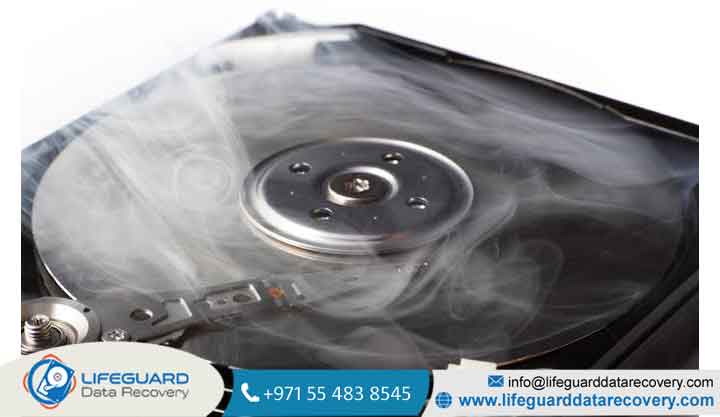
Mechanical Wear & Head Crashes: The read/write heads float on a cushion of air created by the spinning platter. If the drive suffers physical shock or bearing wear, the head can physically contact the platter surface, stripping away the magnetic coating and destroying data instantly.
-
Magnetic Degradation: Over time, the magnetic domains on the platters weaken, causing read errors that turn healthy disk blocks into bad sectors.
-
Electronic Component Breakdown: The external Printed Circuit Board (PCB) houses power regulation chips and controller microprocessors that can fail due to thermal stress or electrical surges.
HDD vs. SSD Failure Modes: Key Differences
It is vital to distinguish failing HDD symptoms from SSD failures. When a mechanical HDD degrades, it almost always provides physical warning signs such as audible noises, gradual slowdowns, or isolated file read errors.
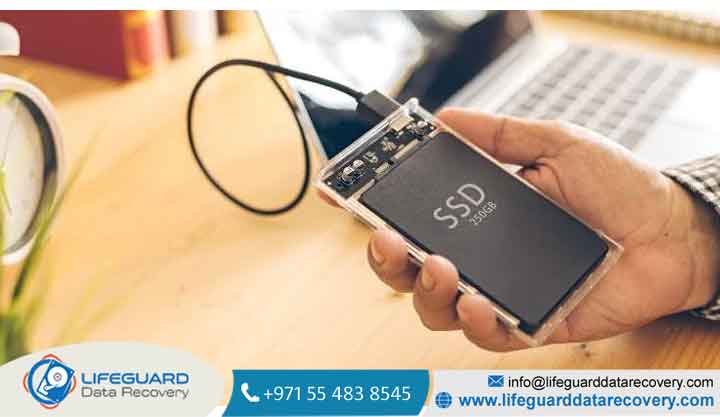
In contrast, SSDs lack moving parts and typically fail silently without warning. An SSD failure often presents as a sudden read-only lock, an instantaneous controller drop-off, or complete refusal to power up.
Primary Causes of Hard Drive Failure
Understanding what causes hard disk failure helps you take preventive steps to maximize hard drive lifespan.
-
Natural Hardware Aging: The typical hard drive lifespan ranges between 3 to 5 years under normal operating conditions. Spindle bearings dry out, lubricated motor channels degrade, and magnetic coatings decay over time.
-
Physical Impacts and Drops: External portable hard drives are particularly vulnerable to kinetic shock. Dropping an active drive causes the head to bounce onto the platter, creating instant physical gouges.
-
Thermal Stress: Poor PC tower airflow or dust build-up causes heat accumulation, which expands internal mechanical tolerances and accelerates lubricant evaporation.
-
Power Instability & Improper Shutdowns: Sudden power loss during active write operations leaves incomplete magnetic tracks and can cause head park failures, resulting in soft bad sectors.
Warning Signs of Hard Drive Failure You Should Never Ignore
Spotting hard drive failure symptoms early provides a critical window to copy important files before the drive locks up permanently.
Unusual Mechanical Sounds (The “Click of Death”, Grinding, or Screeching)
If you are asking “why is my hard drive making clicking noises?”, you are likely observing the infamous “Click of Death.” This sound occurs when the actuator arm moves the read/write head across the platter to locate a track, fails to read the magnetic alignment, resets back to its home position, and retries rhythmically.
Extreme Slowdowns, Freezing, and 100% Disk Usage
If you are wondering “why is my computer running slow?” or freezing whenever you attempt to open folders, your OS may be hung up trying to read data from deteriorating sectors. When Windows encounters unreadable sectors, it repeatedly retries the operation, causing File Explorer to lock up or report 100% Disk Usage in Task Manager.
Corrupted Data, Missing Files, and File Access Errors
When files that opened smoothly yesterday suddenly display errors like “File format not recognized” or disappear entirely from folders, magnetic degradation is likely taking place.
Frequent System Crashes and Blue Screen of Death (BSOD)
If you wonder “why does my hard drive keep crashing?”, check if vital system files are located on bad sectors. When Windows attempts to access system code from a degraded sector, it triggers a system crash (STOP Code / BSOD).
Computer Fails to Boot or Drive Unrecognized
Errors such as “Operating System Not Found”, “Insert Boot Media”, or a drive dropping out of the BIOS/UEFI altogether signal severe firmware or boot partition damage.
Accumulation of Bad Sectors
What are bad sectors on a hard drive? Bad sectors are tiny storage areas that have lost their magnetic integrity. They fall into two categories:
-
Hard Bad Sectors: Caused by physical platter damage or head contact (irrecoverable).
-
Soft Bad Sectors: Caused by interrupted write cycles (repairable via low-level zero fills).
Vanishing Drive Partitions (RAW Drive Status)
If a secondary partition (e.g., D: drive) suddenly disappears from Windows Explorer and appears as RAW or Unallocated inside Windows Disk Management, the drive’s Master Boot Record (MBR) or GUID Partition Table (GPT) has failed.
File Transfer Stalls and I/O Device Errors
Receiving an “I/O Device Error” during standard file copying indicates that the operating system’s input/output controller lost communication with the drive during a transfer request.
Abnormally High Drive Operating Temperatures
While drives run warm during heavy read/write operations, excessive heat (above 55°C / 131°F) indicates high spindle bearing friction or failing PCB voltage regulators, both of which accelerate thermal breakdown.
External Hard Drive Specific Symptoms
External hard drive failure symptoms often mirror internal drives, but can also include intermittent USB disconnects or power delivery failure. Always test external drives with a new USB cable and a different port to rule out a faulty bridge chip inside the external enclosure.
How to Tell If a Hard Drive Is Failing: Diagnostic Steps
If your system exhibits early hard drive warning signs, follow these structured diagnostic steps to evaluate drive health safely.
Check SMART Status via Command Prompt
Windows includes built-in tools for a fast, top-level hard drive health check:
-
Press
Windows Key + Xand select Command Prompt (Admin) or Terminal. -
Type
wmic diskdrive get statusand press Enter.
If the response displays “OK”, basic parameters are within limits. If it displays “Pred Fail”, back up your data immediately.
Understanding Key SMART Attributes
Third-party diagnostic utilities (such as Crystal DiskInfo or Hard Disk Sentinel) provide detailed access to raw S.M.A.R.T. (Self-Monitoring, Analysis, and Reporting Technology) values. Watch these critical metrics closely:
-
ID 05 (Reallocated Sectors Count): Tracks sectors that were damaged and remapped to spare sectors. A rising reallocated sector count is one of the clearest signs of a failing hard drive.
-
ID C5 / 197 (Current Pending Sector Count): Unstable sectors waiting to be remapped.
-
ID C6 / 198 (Offline Un correctable Sector Count): Read/write errors that could not be corrected by built-in Error Correcting Code (ECC) algorithms.
Running Surface Scans and CHKDSK Safely
CRITICAL SAFETY RULE: Never run
chkdsk /f /ron a drive that is physically clicking or making grinding noises. CHKDSK performs intense read/write operations across every sector, which will destroy a physically degraded drive before you can save your files. Only run disk repair software AFTER your vital data is safely backed up.
Emergency Triage: What to Do When Your Hard Drive Is Failing
When a hard drive shows severe symptoms, taking the right immediate actions can mean the difference between total data recovery and permanent loss.
Step-by-Step Emergency Response Protocol
Avoid Dangerous DIY Recovery Myths
-
Do NOT freeze your drive: Placing a drive in the freezer introduces moisture condensation directly onto the magnetic platters once it warms up, causing irreversible head adhesion.
-
Do NOT open the casing: Hard drives must only be opened inside an ISO Class 5 cleanroom environment. Microscopic dust particles in ambient room air will destroy platters when the heads pass over them.
If your drive has sustained severe mechanical damage or contains critical unbacked-up business data, stop DIY attempts and consult professional data recovery services to inspect the drive inside a cleanroom.
Prevention & Maintenance Tips to Extend Hard Drive Lifespan
Following solid hard disk maintenance tips reduces hardware stress and helps prevent unexpected failures.
-
Adopt the 3-2-1 Backup Strategy: Maintain 3 total copies of your data on 2 different storage media types (e.g., local HDD + external drive), with 1 copy stored offsite or in cloud storage.
-
Use an Uninterruptible Power Supply (UPS): Connect desktop computers and NAS units to a battery backup to protect against voltage spikes and brownouts.
-
Ensure Adequate Cooling: Keep PC fans clean and maintain ambient operating temperatures below 40°C (104°F).
-
Enable Safe Ejection Practices: Always use the “Safely Remove Hardware and Eject Media” option before unplugging external USB hard drives.
Frequently Asked Questions (FAQs)
Can a failing hard drive still work?
Yes, a failing hard drive can often continue operating for days or weeks while accumulating bad sectors. However, performance will degrade significantly, and complete collapse can happen suddenly without further warning.
Can a damaged hard drive be repaired?
Logical file corruption and soft bad sectors can be repaired via formatting or disk utilities. However, physical platter scratches, broken heads, or burnt controller chips cannot be repaired for continued daily use; they can only be temporarily bypassed in a cleanroom to extract existing data.
How do I know if my hard drive or SSD is failing?
While HDDs provide physical warnings (clicking, grinding, severe file access delays), SSDs fail silently due to controller wear or flash memory exhaustion. Common SSD failure symptoms include sudden read-only mode locks, boot errors, and drive disappearance without audio warnings.
Why is my external hard drive clicking, but still detected by my PC?
If an external drive clicks while plugged in, it may not be receiving sufficient power from the USB port, forcing the drive heads to power-cycle continuously. Try plugging it into a USB port directly on the motherboard or using a powered USB hub before assuming hardware failure.
Conclusion & Action Checklist
Detecting the early signs of hard drive failure gives you the power to protect your data before a complete hardware breakdown occurs. If your hard drive exhibits clicking noises, persistent file access errors, or SMART warnings, act immediately.