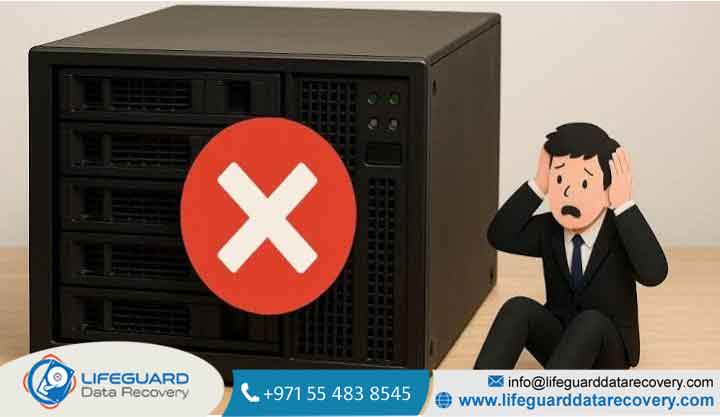
A sudden power outage is a total headache for any system admin. One minute everything is fine, and the next your server just won’t boot up, your RAID drives are acting weird, or your database is showing errors. It’s scary, but don’t panic. If your server crashed after power failure, taking the right steps now can save you from losing your important data.
Why Power Cuts Are So Bad for Servers
When power cuts out out of nowhere, it hurts your server in two main ways: what happens during the crash, and what happens right after power comes back.
-
Losing Memory Data: Servers keep temporary data stored in RAM or system cache. If power drops mid-write, that data is instantly lost. This is how you end up with server corruption after power outage, where files or system partitions get messed up halfway.
-
Power Surges: When the electricity grid flips back on, a small spike in voltage can shoot straight into your server. This can burn out the power supply unit (PSU), damage the motherboard, or fry hard drive boards.
Quick Breakdown: Hardware vs. File System Damage
| What Broke? | Physical Hardware Damage | File System & Data Damage |
| What caused it? | Power surge spikes or physical parts failing | Power cut mid-way while writing data |
| What does it look like? | No lights, strange clicking sounds, dead power supply | Error messages on screen, missing files, boot failure |
| How bad is it? | Physical drive or controller is broken | Files are scrambled or missing boot settings |
| What to do? | Swap parts or call cleanroom experts | Use read-only repair tools or fix file journals |
What NOT to Do Right After a Crash
When you deal with a server crash due to power outage, acting too fast without thinking can actually make things worse. Try to avoid these basic mistakes:
-
Don’t keep hitting the power button: If a hard drive got physically hurt, forcing it to spin up over and over will scrape the internal disks and ruin data forever.
-
Don’t rush to rebuild RAID arrays: If your RAID array shows drives as offline, don’t force them back online or start a rebuild blindly. You might overwrite good data.
-
Don’t run repair tools right away: Commands like
chkdskorfscktry to fix errors by deleting broken file parts. On a dying drive, this might wipe your unbacked-up files for good. -
Don’t reinstall the Operating System: Installing a fresh OS writes over old data, making it super hard to get lost files back.
Signs Your Server Had a Rough Power Cut
Check these common symptoms to figure out what part of your system got hit.
Physical & Power Warnings
If your server won’t start after power outage, take a look at the box itself. Are there blinking orange lights? Any strange beep noises? Or is it totally silent with no lights at all? If you have remote management like HPE iLO or Dell iDRAC, log in there first to check hardware logs without turning on the main server
Boot Screen Errors
If the server not booting after power failure turns on but gets stuck on black screens with text like "No Boot Device Found", or keeps restarting non-stop, the power cut likely broke the boot files that tell the server how to load your system.
File & Database Failures
Sometimes the server turns on, but your main software or database (like SQL or MySQL) won’t launch. This usually means dirty shutdowns caused server filesystem corruption recovery problems or left your databases stuck in “Suspect” or corrupt modes.
How to Safe Troubleshoot and Fix Your Server
Follow these simple steps in order so you don’t accidentally cause more damage while trying server recovery after power outage.
Check Power and Hardware First
Unplug all power cables from the back. Hold down the server power button for about 15 seconds to drain any leftover electricity trapped inside. Plug things back in using a proper UPS battery backup, then turn on the power supply to check if lights look normal.
Check Your RAID Controller
Boot into your RAID configuration screen. See if it says your array is “Degraded” or “Foreign”. Check if the battery module on the RAID card saved the unwritten cache. If multiple disks look failed all at once, don’t force anything.
Getting help from professional server data recovery services early on is much safer than running commands that might wipe the array settings.
Fix OS Boot and File Issues
If hardware looks fine, try to clone your hard drive sector-by-sector to another drive first if you can. Then, boot the server using a USB live-repair disk and mount your drive in read-only mode so you can view files safely.
Once your backup copy is safe, you can try running file fix tools to repair system errors.
Check Apps and Databases
When your drives are mounting fine, check your databases. If you run into server database recovery after crash errors, use built-in tool commands (like DBCC CHECKDB for SQL) to clean up bad transactions left behind from the sudden shutdown.
DIY vs. Calling the Professionals: Which Should You Do?
It helps to know when you can fix things yourself, and when it’s time to step back and ask for help.
When it’s OK to try fixing it yourself:
-
All hard drives pass health tests without any clicking or bad sector warnings.
-
The RAID screen shows all configuration files are healthy and intact.
-
You already made a complete disk copy/clone on a separate spare drive.
If all three are true, you can use recovery software to try and recover files from damaged server installations.
When to stop and call for help:
-
Your hard drives are making strange clicking, grinding, or buzzing noises (server hard disk failure after power cut).
-
Two or more drives in your RAID setup failed at the exact same time.
-
The server card cannot detect your drives at all.
-
Your main company database refuses to open no matter what basic fixes you try.
If hard drives are physically failing, running software on them will scrape the magnetic disk inside, making data gone forever. That’s when you need specialized professional server recovery services with cleanrooms to physically fix the drive.
How to Stop This from Happening Next Time
A few setup upgrades can protect your server from dying next time the lights go out:
-
Get an On-Line UPS: Use an enterprise UPS that cleans power flow so your server never feels voltage dips or power spikes.
-
Set Up Auto Shutdown Scripts: Install software that tells your server to save everything and turn off gracefully when the UPS battery gets low.
-
Use RAID Cards with Battery Cache: Make sure your RAID card has a small backup battery so it doesn’t lose data if power cuts mid-write.
-
Follow the 3-2-1 Backup Rule: Always keep 3 copies of your data on 2 different devices, with at least 1 backup stored somewhere offsite in the cloud or another building.
Quick FAQ
Can a simple power cut physically break a hard drive?
Yes it can. The power surge when grid power comes back on can burn electrical parts on the drive board. Also, sudden power loss on older drives can make read-write heads crash onto magnetic surfaces.
Why does my RAID show as “Foreign” after a power loss?
Because the server died while writing, some drives updated their timestamps while others didn’t. When turning back on, the card sees mismatched times and labels the drive configuration as “Foreign” to protect your files.
Can I just run chkdsk or fsck right away?
Better not to. If the drive has physical damage, running those tools forces heavy read-write operations that can destroy bad sectors completely and delete files permanently. Always clone your drive first!
How long does a server UPS battery last during an outage?
Most basic UPS setups only give you around 5 to 15 minutes of power. They aren’t meant to run servers for hours, just long enough for generators to start or to let system safely shut down automatically.